Showing posts with label node. Show all posts

Tuesday, January 10, 2017

Type 2 Diabetes Diagnosis

I won't go through all the details, but on December 26th, 2016, I was diagnosed with Type 2 Diabetes. As you probably expect, it means a drastic life-style change for me. I have to give insulin injections, and monitor blood glucose, as well as monitor the amount of carbohydrates that I consume. To help me track that information I found an application on Google Play called Diabetes:M (Play Store). The application is free, but ad supported. You can purchase the ad-free license for ~$9 or so, which I purchased as soon as I was sure it was the application that I wanted to use.

2017-01-11 04.04.33

This allows me to track everything that I need to be successful in controlling my diabetes. This includes information like my meals, my medications, blood pressure, insulin injections, etc. One of my favorite features of Diabetes:M is the ability for the application to sync the SQLite database, that contains all of the logged data, to a cloud storage provider like Dropbox. This, as a developer, got me thinking how I could leverage that so that I can provide my information to my wife so she is aware of what my current blood glucose level is.

To start this project I created an Express node application and put a copy of the SQLite database in the directory structure of the application. I then went to work on creating some SQL queries to pull information from the Diabetes:M database. To start, I queried my most recent glucose level.
dm

One of the important steps to make the data current was for me to find a way to detect when a new version of the database was saved to my Dropbox. To do this, I found an application (for windows) called Directory Monitor. There is a free version of the application, which is what I am currently using, as the free version fits all my needs. I configured the application to run a shell script when the SQLite database file is modified on my system, which happens every time I log information in the Android application.

dm-info

The shell script goes and extracts the dbz file, which is just a gzipped (or some other compression) SQLite file. It takes that extracted database file and puts it in the /data directory in the express application. It then does a git commit and git push of the git repository. This commit triggers a deploy in Azure. Within seconds of me taking my glucose level, the database is updated on Azure, so when my wife wants to check to see how I am doing, she can see the data in near real-time.

So when she opens the site on her phone she would see something like the following:


current-level


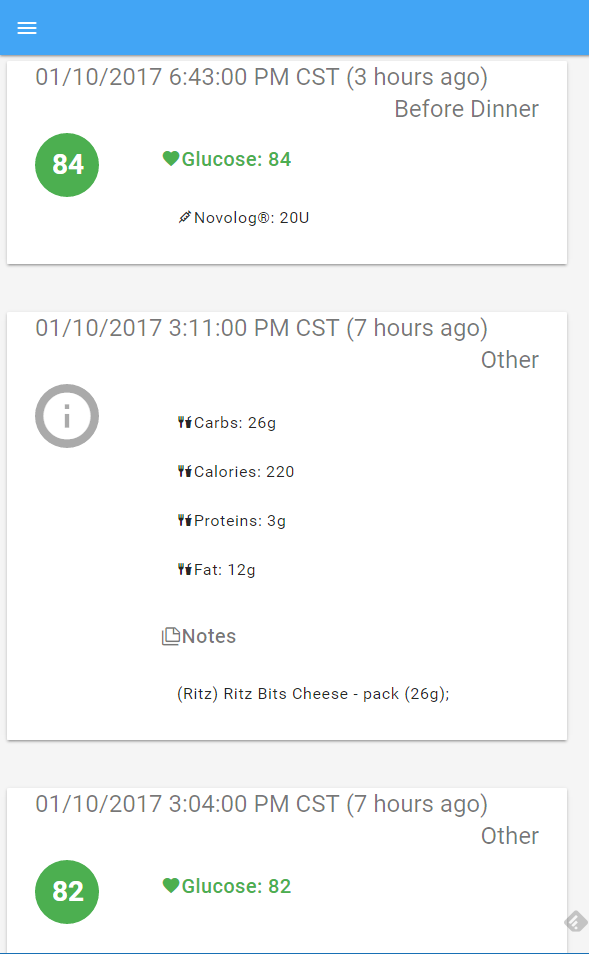
She can even see a history of all the events that I have entered into Diabetes:M
 

log


And, because I could, I added a dashboard with some charts

db1

This is just the beginning of what I have done. I have other things I want to add so my wife, and family, can support me in managing this so I can live a healthier life. Right now, the code for this is not publicly available because it is still very tied to my information and configuration. I will work towards getting this in a place that I can share the code so others can use this.


Some other ideas that I think will be fun, and useful:

  • Alexa Skill – Wife will be able to ask Alexa what my glucose is, and will respond with something like "about 32 minutes ago, Ryan's glucose was 132"
  • iOS/Android 'support' app to be able to receive push notifications when there is a reason for concern, like high, or low glucose levels.
  • More detailed reports and the ability to change the timespan of the data.
  • Support for other systems to monitor the database changes. I have multiple Raspberry PI's that are always running, one of them could monitor the database for changes in Dropbox and the rPi could sync the database.
  • Nightscout (CGM in the Cloud) – Integration / Support for Nightscout and all the work that the community has already done here.
Showing posts with label node. Show all posts

Type 2 Diabetes Diagnosis

I won't go through all the details, but on December 26th, 2016, I was diagnosed with Type 2 Diabetes. As you probably expect, it means a drastic life-style change for me. I have to give insulin injections, and monitor blood glucose, as well as monitor the amount of carbohydrates that I consume. To help me track that information I found an application on Google Play called Diabetes:M (Play Store). The application is free, but ad supported. You can purchase the ad-free license for ~$9 or so, which I purchased as soon as I was sure it was the application that I wanted to use.

2017-01-11 04.04.33

This allows me to track everything that I need to be successful in controlling my diabetes. This includes information like my meals, my medications, blood pressure, insulin injections, etc. One of my favorite features of Diabetes:M is the ability for the application to sync the SQLite database, that contains all of the logged data, to a cloud storage provider like Dropbox. This, as a developer, got me thinking how I could leverage that so that I can provide my information to my wife so she is aware of what my current blood glucose level is.

To start this project I created an Express node application and put a copy of the SQLite database in the directory structure of the application. I then went to work on creating some SQL queries to pull information from the Diabetes:M database. To start, I queried my most recent glucose level.

dm

One of the important steps to make the data current was for me to find a way to detect when a new version of the database was saved to my Dropbox. To do this, I found an application (for windows) called Directory Monitor. There is a free version of the application, which is what I am currently using, as the free version fits all my needs. I configured the application to run a shell script when the SQLite database file is modified on my system, which happens every time I log information in the Android application.

dm-info

The shell script goes and extracts the dbz file, which is just a gzipped (or some other compression) SQLite file. It takes that extracted database file and puts it in the /data directory in the express application. It then does a git commit and git push of the git repository. This commit triggers a deploy in Azure. Within seconds of me taking my glucose level, the database is updated on Azure, so when my wife wants to check to see how I am doing, she can see the data in near real-time.

So when she opens the site on her phone she would see something like the following:


current-level


She can even see a history of all the events that I have entered into Diabetes:M


log


And, because I could, I added a dashboard with some charts

db1

This is just the beginning of what I have done. I have other things I want to add so my wife, and family, can support me in managing this so I can live a healthier life. Right now, the code for this is not publicly available because it is still very tied to my information and configuration. I will work towards getting this in a place that I can share the code so others can use this.


Some other ideas that I think will be fun, and useful:

  • Alexa Skill – Wife will be able to ask Alexa what my glucose is, and will respond with something like "about 32 minutes ago, Ryan's glucose was 132"
  • iOS/Android 'support' app to be able to receive push notifications when there is a reason for concern, like high, or low glucose levels.
  • More detailed reports and the ability to change the timespan of the data.
  • Support for other systems to monitor the database changes. I have multiple Raspberry PI's that are always running, one of them could monitor the database for changes in Dropbox and the rPi could sync the database.
  • Nightscout (CGM in the Cloud) – Integration / Support for Nightscout and all the work that the community has already done here.